
Service · LFG RA
Near a landfill? Get the assessment that gets the permit.
If your site sits within a landfill buffer, the planning process will ask one question: is landfill gas a risk here? A Landfill Gas Risk Assessment answers it — methane and carbon dioxide source, migration and accumulation risk, assessed to CIRIA C665 and EPA Victoria guidance — and gives your permit a defensible technical basis.
What it is
The gas question, answered before it stalls your project.
Landfills — including ones closed decades ago — generate methane and carbon dioxide that can migrate through the ground and accumulate in buildings, service trenches and confined spaces nearby. That's why EPA Victoria's buffer guidance (publication 1642) puts development near current and former landfills under planning scrutiny.
A Landfill Gas Risk Assessment (LFG RA) establishes whether landfill gas exists on or near your site, evaluates the risk of migration and accumulation, and identifies the mitigation measures — if any — a safe development needs. Assessed to CIRIA C665, the methodology regulators and auditors recognise.
Who commissions one
Most of our LFG RA work comes from the planning side — town-planning consultants steering permit applications, developers with sites inside a buffer, and councils assessing referrals. If that's you, we speak your language: the deliverable is built for the planning process.
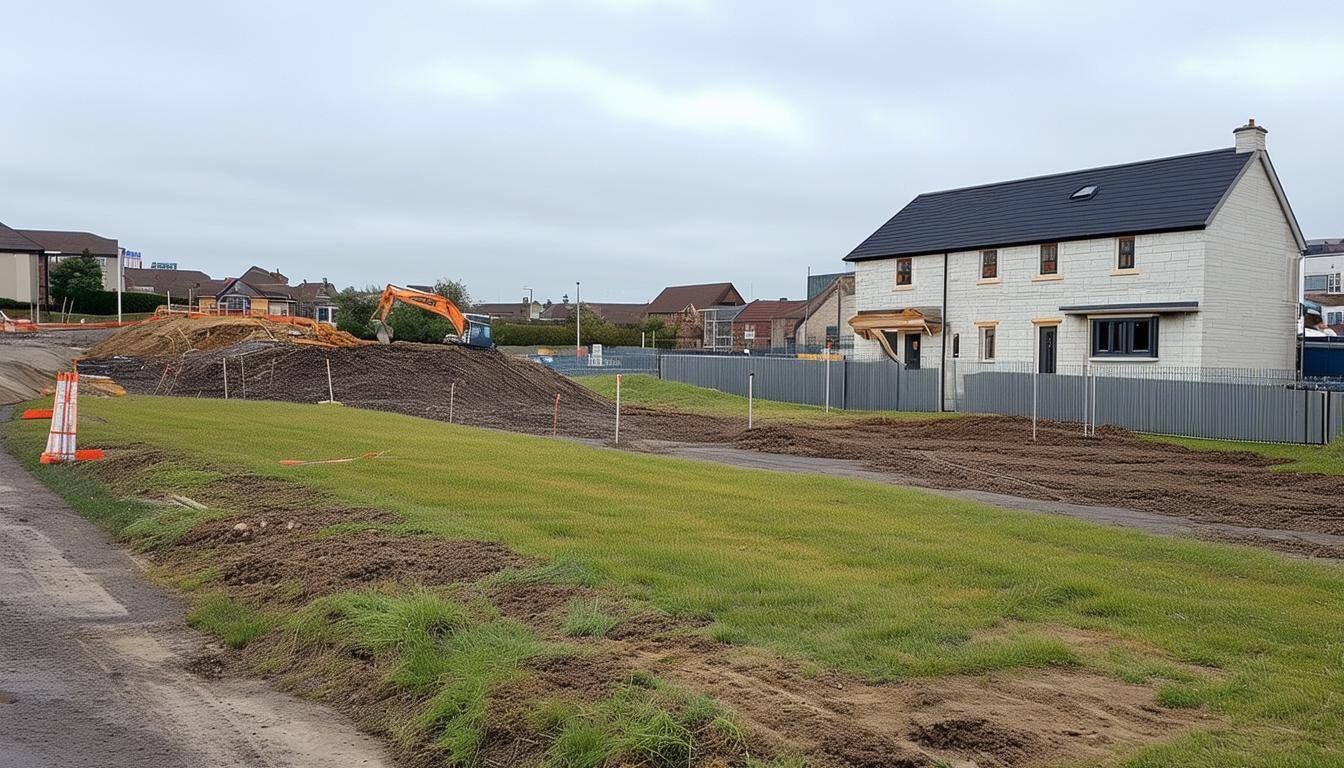 DEVELOPMENT INSIDE A LANDFILL BUFFER
The deliverable
What a defensible LFG RA covers.
01 · SOURCE
Landfill characterisation
The landfill's history, waste type, age and setting — how much gas it can plausibly generate, and for how long.
02 · PATHWAY
Migration assessment
Geology, groundwater, services and made ground between the landfill and your site — the routes gas could actually travel.
03 · RECEPTOR
Accumulation risk
Your proposed development's buildings, basements and confined spaces, evaluated for where gas could collect and who it could affect.
04 · RESPONSE
Mitigation & conclusions
A clear risk conclusion to CIRIA C665, with proportionate mitigation measures where they're needed — and none where they're not.
Process
Desktop first. Monitoring only where the risk justifies it.
We stage the assessment so you never pay for field work the desktop evidence doesn't warrant — and the report lands in the format councils and their referral bodies expect.
Desktop study & data review
Historical site data, land use records and EPA Victoria guidance reviewed; landfill buffer zones and potential gas migration pathways identified.
On-site gas monitoring WHERE REQUIRED
Monitoring wells installed to test for methane, carbon dioxide and other gases, with multiple sampling events to capture seasonal variation.
Risk evaluation & mitigation planning
Hazards determined from measured gas flows and concentrations, and the mitigation strategies needed to protect future site occupants identified.
Regulatory-compliant LFG RA report
Findings aligned with EPA Victoria guidance, with clear recommendations written to support planning permit approval.
Why it matters
Why the gas question can't wait until construction.
PROGRAM
Late findings are expensive findings
Unexpected gas discovered late in a project means redesign, retrofit protection measures and stalled approvals. Assessed early, the same risk is usually a manageable design input.
PLANNING
Referral bodies expect it
For sites within a landfill buffer, councils and their referral authorities look for a credible gas risk assessment before granting a permit. Arriving without one invites a request for further information — and months of delay.
SAFETY
It protects the people who live there
Methane accumulating in an enclosed space is an explosion risk; carbon dioxide displaces oxygen. The assessment exists to make sure future occupants never encounter either.
Not sure if your site is inside a buffer?
Many former landfills aren't obvious on the ground — the tell-tale signs live in historical records. Read our guide to checking whether your property is near a former landfill, or ask us to check for you — it's a quick desktop exercise.
FAQ
Common LFG RA questions.
Do I need an LFG RA for my planning permit?
If your site is within the buffer of a current or former landfill, it's very likely — councils and referral bodies expect the gas question to be answered before a permit is granted, consistent with EPA Victoria's buffer guidance (publication 1642). Our guide "Do I need an LFG RA for a planning permit?" walks through the triggers.
What does an LFG RA involve — is gas monitoring always needed?
No. The assessment is staged: it starts with a desktop study of the landfill, the ground between it and your site, and your proposed development. Where the desktop evidence shows a credible pathway, on-site monitoring wells and multiple sampling events follow — but if the risk can be characterised without field work, you don't pay for field work. Every stage is scoped and priced in writing before it starts.
How is an LFG RA different from an environmental audit?
An LFG RA is a targeted technical assessment of one risk — landfill gas — carried out by a consultant, usually to support a planning application. An environmental audit is a broader statutory process conducted by an EPA-appointed environmental auditor. In many cases a well-scoped LFG RA is what the planning process actually needs; where an audit is required, the LFG RA becomes core evidence within it. See our comparison: LFG RA vs environmental audit.
What are landfill buffer distances?
EPA Victoria's guidance sets recommended separation distances between landfills and sensitive uses, based on factors like the waste type and whether the landfill is operating or closed. Being inside a buffer doesn't prohibit development — it means the risk needs to be assessed and, where necessary, managed. Our explainer on landfill buffer distances in Victoria covers how they work.
Related reading
Plain-English landfill gas guides.
Get the gas question answered — and the permit moving.
Fixed written scope and price before we start, staged so you only pay for the field work the risk justifies. Prefer a formal written quote? Use our LFG RA quote form.